Your Face Is Now a Weapon: How Synthetic Media Is Rewriting the Rules of Identity Fraud
Not long ago, faking someone's likeness convincingly enough to deceive a trained professional required a Hollywood budget and weeks of post-production work. Today, a moderately powerful consumer laptop and a handful of publicly available photographs can accomplish something disturbingly similar in under an hour. The democratization of deepfake technology — synthetic media generated or manipulated by artificial intelligence — has quietly handed one of the most potent tools in the fraudster's arsenal to nearly anyone willing to look for it.
For cybersecurity professionals and ordinary internet users alike, the implications are significant and still unfolding.
From Novelty to Threat Vector
The term "deepfake" entered the public consciousness around 2017, initially associated with non-consensual synthetic pornography and viral political satire. Law enforcement and security researchers flagged the technology early as a potential instrument of harm, but for several years the computational demands kept sophisticated fabrications largely out of reach for casual bad actors.
That window has closed.
In 2024, a multinational firm's Hong Kong office wired approximately $25 million to fraudsters after an employee participated in a video conference call in which every other participant — including a convincing simulacrum of the company's chief financial officer — was entirely AI-generated. The employee reportedly expressed initial skepticism before the call but was reassured by the familiar faces on screen. The funds were unrecoverable.
That case is not an outlier. It is a preview.
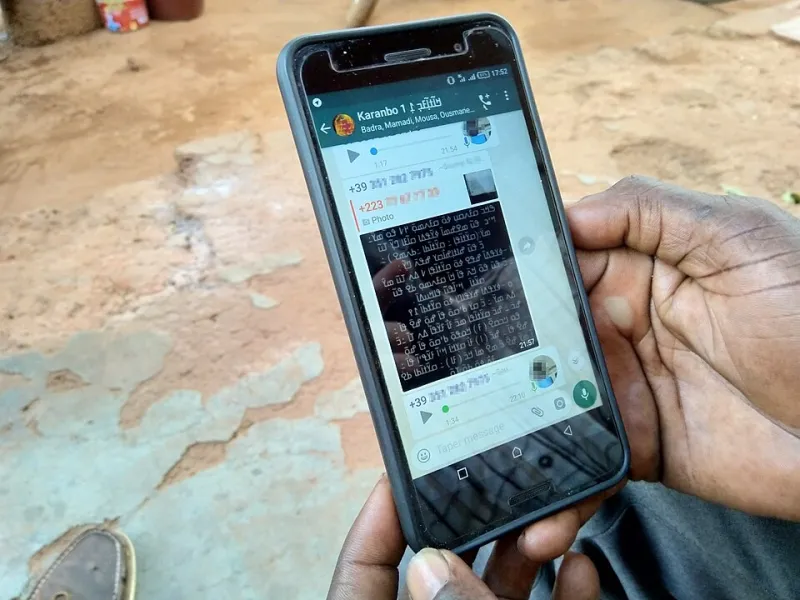
The FBI's Internet Crime Complaint Center has documented a steady rise in reports involving synthetic audio and video in business email compromise schemes, romance fraud, and what investigators now categorize as "virtual kidnapping" — calls in which a cloned voice, often harvested from social media content, convincingly mimics a family member in distress to extort emergency payments.
The Technical Barriers Are Gone
Understanding why this threat has accelerated requires a brief look at the underlying technology. Generative adversarial networks, or GANs, and more recently diffusion-based models, have dramatically lowered the computational threshold for producing believable synthetic media. Open-source tools, some originally developed for legitimate film production and academic research, have proliferated across platforms where oversight is limited.
The raw material for these attacks is abundant and largely voluntary. Americans post an estimated 3.2 billion photographs and videos to social media platforms every single day. Each tagged image, each video clip, each voice memo shared in a semi-public space contributes to what security researchers call an "identity corpus" — a dataset from which AI systems can reconstruct a person's appearance, vocal patterns, and mannerisms with increasing fidelity.
Public figures and corporate executives represent the highest-value targets, but the barrier to fabricating a convincing likeness of a private individual has fallen sharply. A few dozen photographs and several minutes of audio are now sufficient for many commercially available synthesis tools.
Social Engineering Gets a Facelift
The most immediately dangerous application of deepfake technology is not mass disinformation — it is targeted social engineering. Security researchers at cybersecurity firm Mandiant and elsewhere have documented campaigns in which synthetic video is deployed not to deceive millions but to deceive one specific person: a payroll administrator, a network engineer with privileged credentials, or a family member who controls access to a financial account.
The psychological mechanics are straightforward and well understood. Human beings are conditioned to trust faces and voices they recognize. When a fraudster can present a convincing visual and auditory facsimile of a trusted colleague or supervisor, the cognitive shortcuts that normally protect us become liabilities. The very instinct that tells us a video call "feels real" is the instinct being exploited.
Extortion campaigns using deepfake imagery have also surged. The FBI issued a public warning in 2023 noting a sharp increase in reports from victims — including minors — whose images had been harvested from social media and used to generate fabricated explicit content that was then leveraged for financial extortion. Investigators refer to these schemes as "sextortion," and the synthetic media variant removes the requirement that any real compromising material ever existed.
Detecting the Undetectable
Perfect deepfake detection does not yet exist, and anyone who claims otherwise is overstating the science. However, a combination of technical tools and behavioral awareness can meaningfully reduce risk.
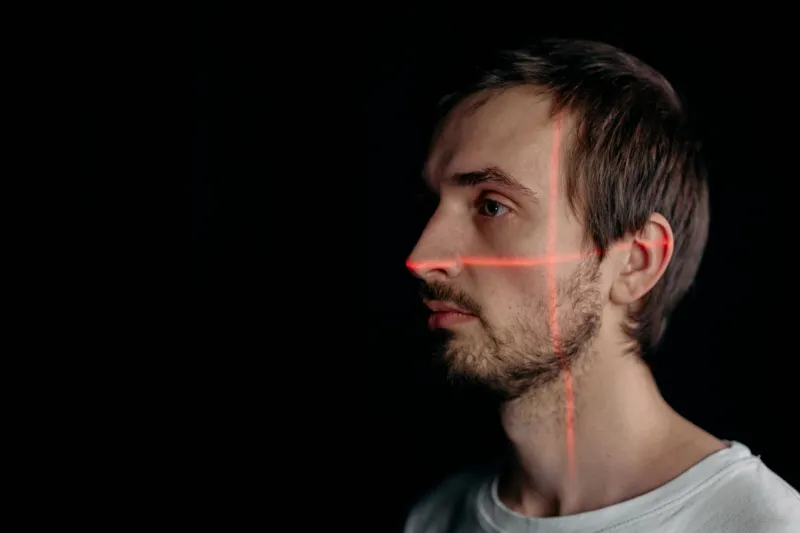
Look for physiological inconsistencies. Current synthesis models still struggle with certain fine details: irregular blinking patterns, unnatural skin texture around the hairline and ears, lighting that does not match between the subject and the background, and subtle asymmetries in facial movement during speech. These artifacts are diminishing with each model generation, but they remain present in many fabrications.
Establish out-of-band verification protocols. Organizations and families alike should adopt pre-agreed challenge questions or secondary communication channels for any request involving money transfers, credential sharing, or sensitive personal information — regardless of how convincing the initial contact appears. A phone call to a known number, independent of whatever channel the suspicious request arrived through, remains one of the most reliable defenses available.
Use detection tools with appropriate skepticism. Platforms including Microsoft, Intel, and several academic institutions have released deepfake detection software. Tools such as Intel's FakeCatcher and Microsoft's Video Authenticator can flag synthetic media with reasonable accuracy under controlled conditions, though they are not infallible and adversarial techniques designed to evade detection exist. They are a useful layer, not a complete solution.
Audit your public digital footprint. Limiting the volume of photographs and video content publicly accessible on social media reduces the raw material available for identity fabrication. This does not require abandoning social platforms entirely, but it does argue for reviewing privacy settings, removing high-resolution facial photographs from public-facing profiles, and being selective about what audio or video content is posted.
The Regulatory Gap
Legislative response in the United States has been fragmented. Several states, including California and Texas, have enacted laws specifically addressing the malicious use of deepfakes in electoral contexts and non-consensual intimate imagery. Federal legislation has advanced more slowly, with proposals in Congress still working through committee as of this writing.
The gap between technological capability and legal protection remains wide. For now, the burden of defense falls disproportionately on individuals and organizations who may not yet fully appreciate the scale of the risk they face.
What CipherWatch Recommends
The emergence of AI-generated identity fraud does not require paranoia, but it does require a deliberate recalibration of how much trust we extend to digital media. Seeing — and hearing — is no longer sufficient grounds for believing. Verification must become a habit rather than an exception, particularly when a communication carries financial or security implications.
The technology will continue to improve. The defenses must improve alongside it.