Swipe Right on Heartbreak: How AI and Cryptocurrency Turned Romance Fraud Into a Billion-Dollar Industry
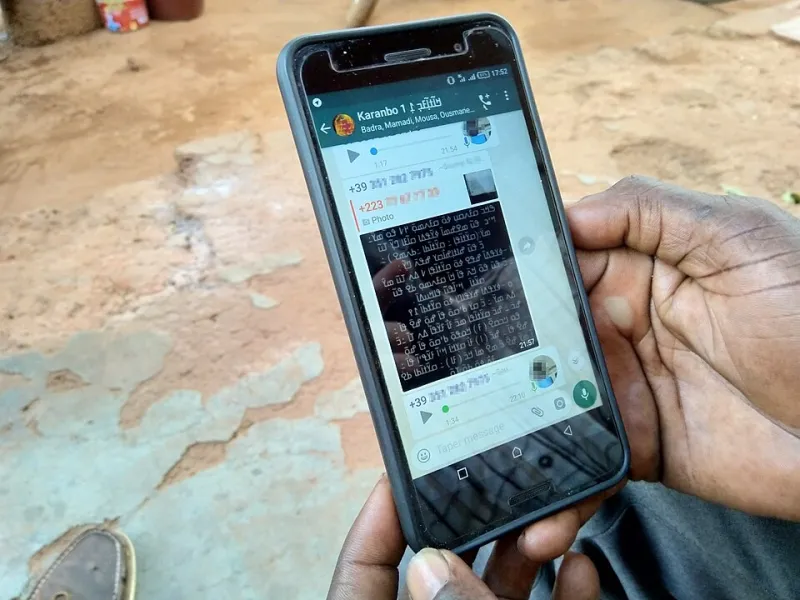
Photo: Coleman Donaldson, CC BY-SA 4.0, via Wikimedia Commons
Linda Carver, a 58-year-old retired schoolteacher from suburban Columbus, Ohio, spent eleven months building what she believed was a profound relationship with a petroleum engineer named "James Whitfield" — a widower working an offshore contract near Singapore. They never met in person. They never spoke on a live video call that she could verify in real time. But they exchanged thousands of messages, shared photographs, discussed retirement plans, and professed love with a consistency and emotional intelligence that Linda describes as "more attentive than any relationship I'd had in my adult life."
Over those eleven months, Linda transferred $214,000 — her entire retirement savings and a portion of a home equity line — into a cryptocurrency platform that James had enthusiastically recommended. The platform, which displayed impressive returns in a convincing dashboard interface, was entirely fraudulent. When Linda attempted her first withdrawal, the platform demanded a 15 percent "tax clearance fee" before releasing funds. James urged her to pay it. She did. The funds were never released. James stopped responding.
Linda's story is not unusual. It is, by the Federal Trade Commission's own accounting, representative of the fastest-growing consumer fraud category in the United States.
The Scale of the Problem
In 2023, the FTC reported that Americans lost more than $1.1 billion to romance scams — a figure widely acknowledged by fraud researchers as a significant undercount, given the shame and confusion that suppress reporting. The FBI's Internet Crime Complaint Center (IC3) placed total losses even higher when accounting for associated investment fraud. Victims span every demographic, but data consistently shows that adults over 50 and those who recently experienced significant life changes — divorce, bereavement, retirement — are disproportionately targeted.
What has changed dramatically in recent years is not the fundamental psychology of the con, but the industrial sophistication of its execution.
From Lonely Inboxes to Algorithmic Empathy
The stereotype of romance fraud — a poorly spelled email from a foreign prince seeking a temporary banking partner — reflects a tactic that peaked in the early 2000s. Contemporary operations bear almost no resemblance to that model.
Modern romance fraud is frequently organized by large criminal enterprises, many of them documented by law enforcement in Southeast Asia and West Africa, that operate with the structure and scale of legitimate call centers. Staff members — some of whom are themselves trafficking victims coerced into participation — manage dozens of romantic personas simultaneously, guided by detailed psychological playbooks that prescribe conversation pacing, emotional escalation, and objection handling.
"These are not improvised cons," says Dr. Pamela Estrada, a behavioral psychologist who has consulted with the FBI's financial crimes unit and provided expert testimony in federal fraud prosecutions. "The scripts account for grief responses, trust-building timelines, and resistance patterns. They are the product of years of refinement and, increasingly, data analytics."
Artificial intelligence has accelerated the sophistication on multiple fronts. Generative AI tools enable the rapid creation of convincing profile photographs depicting people who do not exist — faces that pass casual reverse-image searches because they have never appeared on any indexed website. AI-assisted translation eliminates the linguistic tells that once allowed alert recipients to identify foreign-origin fraud. And large language models, when fine-tuned on romantic correspondence, can generate emotionally resonant, contextually aware messages at scale.
The "Pig Butchering" Model: Patience as a Weapon
The cryptocurrency-investment hybrid that consumed Linda Carver's savings has a name in the fraud research community: "sha zhu pan," translated from Mandarin as "pig butchering" — a grimly descriptive term for the process of fattening a victim's trust before slaughtering their finances.
The structure follows a deliberate sequence. An initial romantic connection is established and nurtured over weeks or months before any financial element is introduced. When investment is eventually broached, it is framed as a personal opportunity the scammer is generously sharing — not a solicitation. Early, small investments appear to generate impressive returns on the fraudulent platform's dashboard, encouraging larger commitments. Victims are often invited to recruit friends and family, compounding losses across social networks.
The platforms themselves are sophisticated enough to fool many technically literate users. They display real-time price charts, transaction histories, and customer service interfaces. Some have even passed initial scrutiny from victims who attempted due diligence by searching the platform's name — because the criminal operation seeds positive reviews and creates superficially credible web presences before launching.
The Deepfake Dimension
Video calls have long served as the primary verification tool for skeptical victims — if you can see the person move and speak, surely they are real. That assumption has eroded with the mainstreaming of real-time deepfake technology.
Researchers at Stanford Internet Observatory documented cases in 2023 in which romance fraud operators used real-time face-swapping software during live video calls, overlaying a synthetic face onto the operator's own image. The technology, once requiring specialized hardware, now runs on consumer-grade laptops. Telltale signs — slight lag, unnatural blinking, inconsistent lighting on the face relative to the background — are detectable but require deliberate attention that emotionally invested individuals are unlikely to apply.
"The deepfake doesn't have to be perfect," notes cybersecurity analyst Trevor Nguyen, who tracks fraud technology trends for a Washington, D.C.-based nonprofit. "It only has to be convincing enough for someone who wants to believe."
Red Flags and Protective Practices
Fraud researchers have identified consistent patterns that, taken together, constitute a warning profile:
- Relationship acceleration: Declarations of deep affection within days or a few weeks of initial contact, often accompanied by the use of terms like "soulmate" or "destiny."
- Perpetual unavailability for in-person meetings: Ongoing professional obligations — military deployment, offshore contracts, international medical missions — that indefinitely prevent meeting.
- Investment introduction: Any romantic contact who introduces a financial opportunity, regardless of how casually or generously it is framed.
- Unverifiable identity: Profile photographs that return no results in reverse-image searches but are also not verifiable against any real social media history.
- Requests routed through cryptocurrency: Any request for financial transfer via cryptocurrency, gift cards, or wire transfer — payment methods specifically chosen for their irreversibility.
For those who suspect active involvement in such a scheme, the guidance from fraud counselors is consistent: do not confront the suspected scammer directly, as this can trigger escalation tactics including threats or fabricated emergencies designed to extract final payments. Instead, disengage, preserve all communications, and report to the FTC at ReportFraud.ftc.gov and to IC3.gov.
Recovery and Resources
Victims of romance fraud frequently describe the emotional aftermath as more devastating than the financial loss — a compound grief that encompasses both the money and the relationship they believed was real. The AARP Fraud Fighter Network and the nonprofit organization Advocate to End Unjust Scams (AEUS) offer peer support programs specifically designed for romance fraud survivors. The FTC's IdentityTheft.gov portal provides step-by-step guidance for victims whose personal information was shared during the fraud.
Financial recovery is rarely complete. Cryptocurrency transactions, by design, are not reversible, and the cross-jurisdictional nature of these operations limits law enforcement's ability to seize and return funds. Several class-action lawsuits have targeted cryptocurrency exchanges alleged to have facilitated pig-butchering proceeds, with mixed results.
Linda Carver now speaks publicly about her experience at community organizations and senior centers across central Ohio. "The most important thing I tell people," she says, "is that I am not stupid. I am a college-educated professional who raised three children and managed a classroom for 30 years. These people are very, very good at what they do. And that is exactly why everyone needs to hear about it."
Report suspected romance fraud to the Federal Trade Commission at ReportFraud.ftc.gov, the FBI's Internet Crime Complaint Center at IC3.gov, or by calling the AARP Fraud Helpline at 1-877-908-3360.