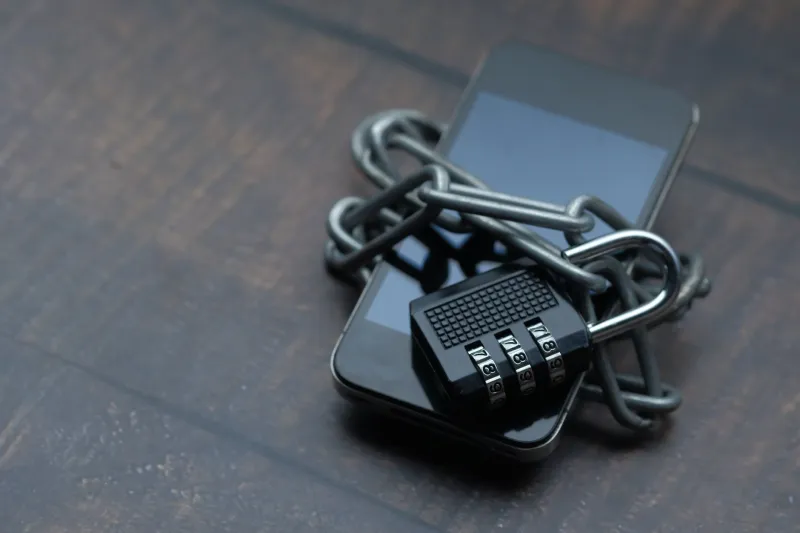
Cracking the Future: How Quantum Computing Is Forcing a Global Rethink of Digital Encryption

For decades, the mathematical foundations underpinning digital encryption have held firm. The algorithms protecting your bank transactions, medical records, and private messages rely on a straightforward principle: certain mathematical problems are so computationally demanding that no machine built today could solve them within a practical timeframe. Factoring a number composed of two enormous prime numbers, for instance, would take a classical computer longer than the age of the universe. That guarantee has been the bedrock of modern cybersecurity.
Quantum computing threatens to dissolve that guarantee entirely.
Unlike classical computers, which process information as binary bits — either a zero or a one — quantum computers exploit the principles of quantum mechanics to process multiple states simultaneously. This property, known as superposition, combined with a phenomenon called entanglement, gives quantum machines the potential to perform certain calculations at speeds that dwarf anything achievable with conventional hardware. For cryptographers, that is not an abstract concern. It is an existential one.
The Algorithm at the Center of the Storm
In 1994, mathematician Peter Shor published an algorithm demonstrating that a sufficiently powerful quantum computer could factor large integers exponentially faster than any classical method. The implications were immediate and alarming to the security community: RSA encryption, one of the most widely deployed cryptographic systems in the world, depends on the difficulty of exactly that problem.
RSA is not alone. Elliptic-curve cryptography, which secures everything from HTTPS web connections to cryptocurrency wallets, faces a similar vulnerability. A quantum machine running Shor's algorithm at scale could theoretically unravel both systems in hours rather than eons.
The operative phrase, however, is "at scale." Current quantum computers — including those developed by IBM, Google, and various defense contractors — remain error-prone and limited in the number of stable qubits they can maintain. Experts debate precisely when a cryptographically relevant quantum computer will emerge, with estimates ranging from a decade to several decades. Yet the intelligence community is not waiting for consensus.
Harvest Now, Decrypt Later
Among the most sobering concerns circulating within cybersecurity circles is a strategy analysts have labeled "harvest now, decrypt later." The premise is straightforward: adversarial nation-states — most frequently China is cited in U.S. government assessments — may already be intercepting and archiving encrypted communications that they cannot currently read. Once a sufficiently powerful quantum computer becomes operational, those archives become readable retroactively.
For data with a long shelf life — classified government communications, corporate intellectual property, sensitive legal correspondence — this is not a future problem. It is a present one. Information encrypted today and captured today could be exposed tomorrow.
The National Security Agency acknowledged this threat vector as early as 2015, when it announced plans to transition to quantum-resistant algorithms. The Cybersecurity and Infrastructure Security Agency (CISA) has since echoed those warnings, urging critical infrastructure operators to begin their own cryptographic inventories.
NIST Steps In
The most consequential institutional response in the United States has come from the National Institute of Standards and Technology. After an eight-year evaluation process involving cryptographers from across the globe, NIST finalized its first set of post-quantum cryptographic standards in August 2024. The selected algorithms — including CRYSTALS-Kyber for key encapsulation and CRYSTALS-Dilithium for digital signatures — are built on mathematical problems believed to be resistant to both classical and quantum attacks.
This standardization effort matters enormously for the broader technology ecosystem. Federal agencies are already under directive to begin migrating toward these standards, and private-sector organizations that contract with the government face cascading compliance requirements. Technology vendors, cloud providers, and software developers are now under pressure to integrate post-quantum algorithms into their products and services — a migration that experts warn will be neither swift nor inexpensive.
A Race Without a Finish Line
The international dimension of this contest adds layers of complexity. China has invested heavily in quantum research, both in computing and in quantum communication technologies such as quantum key distribution. The European Union has launched its own quantum flagship initiative. Academic institutions from MIT to ETH Zurich are publishing research at a pace that outstrips any single government's ability to monitor comprehensively.
This is not merely a technological competition. It is a geopolitical one. Nations that achieve cryptographically relevant quantum computing first will possess an asymmetric intelligence advantage of historic proportions. The ability to read encrypted communications from adversaries — past and present — would represent a surveillance capability without modern precedent.
U.S. lawmakers have taken notice. The Quantum Computing Cybersecurity Preparedness Act, signed into law in late 2022, directed federal agencies to prioritize the adoption of post-quantum cryptography and required the Office of Management and Budget to produce migration guidance. The legislation was a signal that Washington views this transition as a national security imperative rather than a technical footnote.
What This Means for Everyday Users
For most Americans, the immediate practical steps are limited but not insignificant. The migration to post-quantum standards will largely occur at the infrastructure level — within operating systems, browsers, cloud platforms, and enterprise software — rather than requiring direct action from individual users. However, awareness carries its own value.
First, consider the sensitivity and longevity of data you transmit digitally. Highly sensitive information — legal documents, financial disclosures, private medical records — shared over encrypted channels today could theoretically be exposed years from now if the harvest-now-decrypt-later threat materializes at scale. Organizations handling such data should be asking their vendors pointed questions about post-quantum readiness.
Second, pay attention to software update cycles. As browser developers and operating system vendors integrate post-quantum algorithms — Google has already begun testing hybrid key exchange mechanisms in Chrome — keeping software current will ensure you benefit from upgraded protections without any deliberate action on your part.
Third, be skeptical of vendors who dismiss the quantum threat as remote. The cryptographic transition required to achieve quantum resistance is one of the most complex infrastructure migrations in the history of computing. Organizations that begin planning now will be far better positioned than those that treat the issue as theoretical.
The Clock Is Running
The precise moment at which a quantum computer becomes capable of breaking RSA-2048 or comparable encryption schemes remains unknown. Security researchers disagree on the timeline. What they do not disagree on is the direction of travel.
Quantum hardware is improving. Error-correction techniques are advancing. Investment from both the public and private sectors is accelerating. The mathematical guarantees that have underpinned digital trust for half a century are not permanent fixtures. They are temporary arrangements whose expiration date is, at this point, a matter of when rather than if.
For cryptographers, policymakers, and technology professionals, the work of building a post-quantum internet has already begun. The question is whether it will be completed before the codes of today become the open books of tomorrow.