When Silence Breaks: The Tools and Tactics Dismantling Encrypted Messaging Privacy
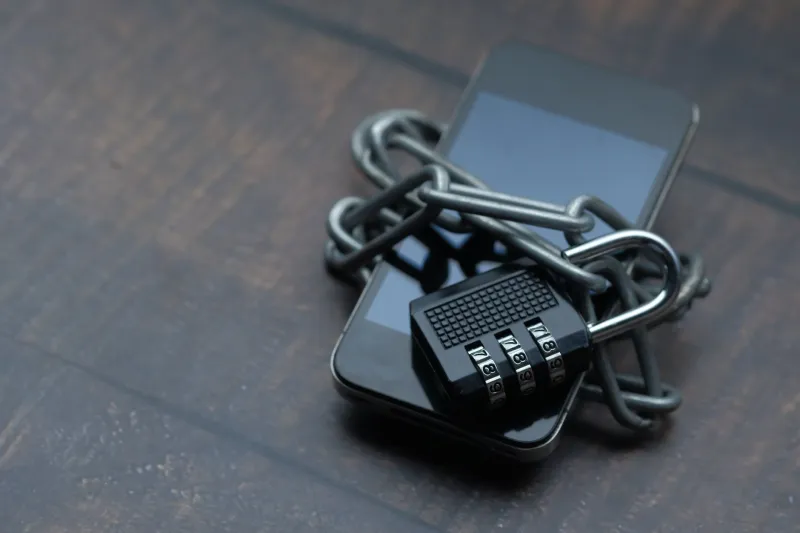
For years, apps like Signal, WhatsApp, and Telegram have been marketed — and widely trusted — as digital vaults. Send a message, and only you and your recipient can read it. No eavesdropping. No interception. No exceptions. That promise, built on the mathematical bedrock of end-to-end encryption, has attracted hundreds of millions of users worldwide, from political dissidents and journalists to ordinary Americans who simply value their privacy.
But a growing body of evidence — drawn from federal court documents, cybersecurity research, and a string of high-profile criminal prosecutions — tells a more complicated story. Law enforcement agencies, both domestic and international, are not breaking encryption itself. They are, however, finding remarkably effective ways around it.
Understanding those methods is not cause for panic. It is, however, essential knowledge for anyone who assumes that downloading an encrypted messaging app is the end of their privacy story rather than the beginning.
The Myth of the Unbreakable App
Encryption, at its core, is a mathematical process that scrambles data so that only authorized parties — those holding the correct cryptographic keys — can read it. Modern end-to-end encryption, as implemented by Signal's open-source protocol, is genuinely formidable. No credible cryptographer has publicly claimed to have broken it.
That distinction matters enormously. When investigators access the contents of an encrypted conversation, they are almost never doing so by defeating the encryption algorithm itself. They are working around it — targeting the devices on which messages are decrypted and stored, the metadata generated by the communications infrastructure, or the human beings who made operational security mistakes.
"The math is not the weak link," explained one cybersecurity researcher who has consulted with federal law enforcement. "The weak link is always the endpoint — the phone in your pocket, the backup in the cloud, the person who left their screen unlocked."
Device Seizure and Forensic Extraction
The most straightforward method available to investigators is also the most legally grounded: seize the physical device and extract what is stored on it. Once a phone is in law enforcement custody, specialized commercial tools — most notably Cellebrite's UFED platform and Grayshift's GrayKey — can, under the right conditions, bypass lock screens and extract decrypted message logs directly from the device's storage.
Federal court filings have repeatedly cited Cellebrite extractions as the source of recovered Signal and WhatsApp messages in criminal cases. Because the messages are decrypted before they are displayed on screen, and because many apps store a local cache of recent conversations, a successfully unlocked phone becomes a readable archive.
The critical caveat is "successfully unlocked." Both iOS and Android have hardened their encryption-at-rest protections significantly in recent years, and the cat-and-mouse dynamic between device manufacturers and forensic tool vendors is ongoing. Nevertheless, the existence of these tools means that physical device security — strong PINs, auto-lock settings, and the use of disappearing messages — is not a peripheral concern. It is central to any meaningful privacy posture.
The Metadata Shadow
Even when message content remains inaccessible, communications generate a persistent trail of metadata — information about who communicated with whom, when, how frequently, and from where. This data does not require breaking encryption to obtain. It is, in many cases, available through lawful process served directly to platform providers.
WhatsApp, owned by Meta, has historically complied with a significant volume of U.S. law enforcement requests, disclosing account registration information, IP address logs, and message timestamps — none of which are protected by end-to-end encryption because none of them constitute message content. Signal, by contrast, has consistently demonstrated in court that it holds almost no user data beyond account creation dates and the date of last connection, a design choice that has earned it considerable credibility among privacy researchers.
That difference is not trivial. In a 2021 federal subpoena response that became widely cited in security circles, Signal provided only two data points for an account because that was genuinely all it possessed. Platform architecture, not just encryption, determines what can be surrendered.
Infiltration, Informants, and the Human Factor
Some of the most consequential law enforcement successes against encrypted platforms have had nothing to do with technology at all. The 2020 takedown of EncroChat — a hardened encrypted phone network used extensively by organized crime across Europe — was accomplished in part through a covert server compromise that allowed French authorities to push malware to devices, capturing messages before they were encrypted for transmission. The operation ultimately led to thousands of arrests across multiple countries.
In the United States, informants embedded within criminal networks have routinely provided investigators with physical access to devices or simply forwarded message screenshots. No cryptographic vulnerability required. The lesson, as security professionals have noted for decades, is that human intelligence remains a dominant vector regardless of how sophisticated the underlying technology becomes.
"Encryption protects data in transit," noted one former federal prosecutor who now works in private cybersecurity practice. "It does not protect against a cooperating witness who was sitting in the same group chat."
The Legislative Pressure Campaign
Beyond technical methods, a sustained policy effort has sought to compel platform providers to build law enforcement access directly into their products. The debate — often framed around the concept of "lawful access" or, by critics, "backdoors" — has resurged periodically since the 1990s Clipper Chip controversy and shows no sign of resolution.
Proponents, including elements of the Department of Justice and the FBI, argue that encrypted platforms have become sanctuaries for child exploitation, terrorism, and drug trafficking that investigators cannot penetrate through conventional means. Opponents, including virtually the entire cryptographic research community, counter that any deliberately weakened encryption is weakened for everyone — that a backdoor accessible to the FBI is, by mathematical necessity, a vulnerability accessible to adversarial nation-states and criminal actors as well.
For now, no U.S. legislation mandating encryption backdoors has passed, though the pressure continues. The EARN IT Act, which has been introduced in multiple congressional sessions, has drawn significant criticism from digital rights organizations who argue it could function as a de facto mandate for platform surveillance.
What This Means for Everyday Users
For the overwhelming majority of Americans, the practical takeaway is not that encrypted messaging is worthless. It is that encryption is one layer of a broader security posture, not a complete solution on its own.
Several practices meaningfully strengthen the protection that encrypted apps provide. Enabling disappearing messages limits the archive available on a seized device. Keeping operating systems and applications updated closes vulnerabilities that forensic tools exploit. Choosing platforms that minimize server-side data retention reduces what can be obtained through legal process. And understanding that cloud backups — including iCloud backups of WhatsApp conversations — may not carry the same encryption protections as the messages themselves is a detail that has caught many users off guard.
Encryption, used thoughtfully, remains one of the most powerful privacy tools available to ordinary citizens. But the record of law enforcement successes against encrypted communications is a clear signal that the app alone is not enough. The device it runs on, the platform that hosts it, and the people who use it all carry weight in the final privacy calculation.
The cipher is only as strong as everything surrounding it.