Fingerprints Don't Lie — But Scanners Can Be Fooled: The Hidden Fragility of Biometric Security
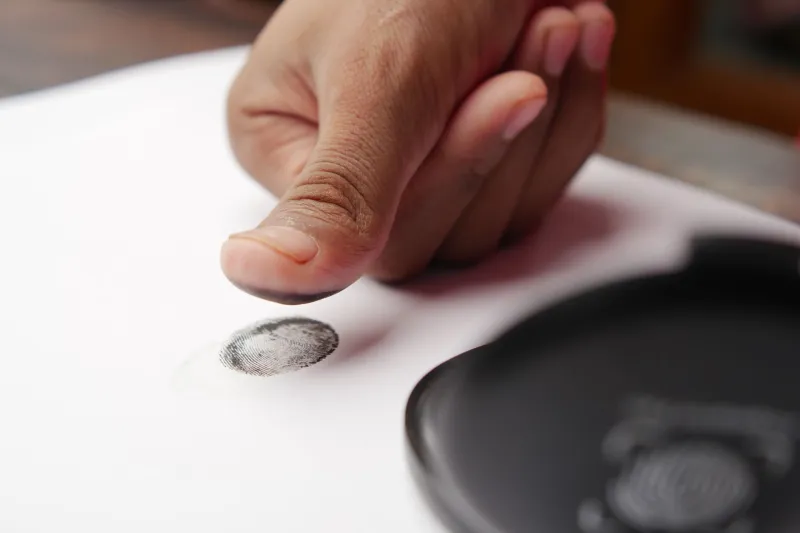
For much of the past decade, the technology industry has encouraged Americans to trust their bodies more than their memories. Unlock your phone with your face. Authorize a bank transfer with your thumb. Clock into work with a glance at an iris reader. The pitch is intuitive and appealing: your biological traits are unique, always with you, and impossible to forget. What the marketing rarely mentions is that the devices reading those traits are imperfect machines — and imperfect machines can be deceived.
Security researchers across the United States and Europe have spent years probing these systems, and their findings paint a more complicated picture than the one presented in smartphone commercials. Biometric authentication is not inherently insecure, but it is insecure in ways that most users have never been warned about — and in ways that carry consequences far more permanent than a stolen password.
How Biometric Systems Actually Work (And Where They Break)
To understand the vulnerabilities, it helps to understand the mechanics. When you enroll your fingerprint on a device, the scanner does not store a photograph of your print. Instead, it converts the ridge patterns into a mathematical template — a numerical representation — which is then stored either on the device itself or, in some enterprise deployments, on a remote server.
When you authenticate, the scanner captures a new image, converts it to a template, and compares it against the stored version. The critical word in that process is compares. No two scans are ever a perfect match; environmental factors such as moisture, skin temperature, and sensor angle always introduce minor variation. To compensate, manufacturers build in a tolerance threshold — a margin of acceptable difference. That threshold is where attackers find opportunity.
Researchers at New York University and Michigan State University demonstrated this concept vividly in a 2019 study by engineering what they called "MasterPrints" — synthetic fingerprint images designed to statistically match the partial prints captured by small smartphone sensors. Because mobile sensors only read a portion of a fingerprint at a time, and because most users enroll multiple fingers, the probability of a false match climbs considerably. The study found that artificially generated prints could fool capacitive smartphone sensors in a meaningful percentage of attempts — not reliably, but often enough to constitute a genuine attack surface.
Facial Recognition: A System Built on Assumptions
Facial recognition has proliferated even faster than fingerprint scanning, appearing in everything from consumer laptops to airport boarding gates. The technology broadly divides into two categories: two-dimensional systems that analyze a flat image, and three-dimensional systems — such as Apple's Face ID — that project thousands of infrared dots to map depth.
Two-dimensional facial recognition systems have proven particularly susceptible to what researchers call "presentation attacks," a clinical term for holding a photograph or a printed mask in front of a camera. Security firm Bkav demonstrated as early as 2017 that certain flagship Android devices could be unlocked with a constructed 3D mask combining printed photographs and silicone components. More recent academic work has shown that even some enterprise-grade access-control terminals — the kind used in office buildings and data centers — can be bypassed with high-resolution printed photographs under certain lighting conditions.
Three-dimensional infrared systems are considerably more robust, but they are not immune. Researchers have explored whether carefully constructed prosthetics or manipulated infrared signatures could confuse depth-sensing cameras, though such attacks currently require resources and expertise that place them beyond casual criminal reach. The concern, security professionals note, is not today's attacker — it is the attacker of five years from now, when those techniques may be cheaper and more accessible.
The Permanence Problem: Why Biometric Compromise Is Different
Every cybersecurity professional who spoke with CipherWatch for this article returned, eventually, to the same fundamental concern: permanence.
When a password is compromised, the remediation is straightforward. You change the password. When a biometric template is compromised — whether through a data breach at an enterprise authentication provider or through the physical extraction of template data from a stolen device — there is no equivalent remedy. You cannot change your fingerprints. You cannot issue yourself a new iris.
This is not a theoretical concern. In 2015, the United States Office of Personnel Management breach exposed the fingerprint records of approximately 5.6 million federal employees and contractors. Security analysts noted at the time that while the immediate damage was difficult to quantify, the long-term implications were open-ended: those fingerprints remain compromised indefinitely, and any future system relying on them as an authentication factor could potentially be targeted using data already in adversarial hands.
Enterprise biometric vendors typically argue that storing only mathematical templates rather than raw images limits this exposure. That argument has merit — a template cannot simply be reverse-engineered into a usable fingerprint image under most circumstances — but researchers have demonstrated that templates themselves can sometimes be used directly to spoof certain sensor types, bypassing the need for reconstruction.
When Biometrics Are Genuinely Safe — And When They Are Not
None of this means that biometric authentication should be abandoned. Context matters enormously, and for many everyday use cases, biometrics offer a practical security improvement over weak or reused passwords. The guidance from security researchers clusters around a few key principles.
Biometrics work best as one factor among several. Multi-factor authentication that combines a biometric with a PIN, a hardware security key, or a time-based one-time password is substantially more resistant to attack than any single method alone. Apple's Face ID, for example, requires a passcode after a restart or after five failed recognition attempts — a design choice that limits the damage a successful presentation attack can cause.
Device-bound storage is preferable to server-side storage. When biometric templates remain on the device — protected by a secure enclave chip, as is the case with modern iPhones and many Android flagships — the attack surface is confined to that physical device. When templates are transmitted to or stored on remote servers, the breach risk expands dramatically. Before enrolling biometrics in any enterprise or third-party application, users should verify where and how that data is stored.
High-stakes environments warrant additional scrutiny. For casual device unlocking, the convenience of biometrics typically outweighs the residual risk. For authorizing financial transactions, accessing sensitive corporate systems, or any context where the consequences of unauthorized access are severe, layering additional authentication factors is advisable.
Older and lower-cost sensors carry greater risk. The quality gap between a flagship smartphone's biometric hardware and a budget device's implementation can be significant. Consumers who rely on fingerprint or facial recognition for sensitive applications should research the specific sensor technology their device employs, rather than assuming all implementations are equivalent.
The Cipher at the Core
Biometric authentication is, at its foundation, a translation problem. Your body generates a signal; a machine interprets that signal; a mathematical system decides whether the interpretation is close enough to grant access. Each step in that chain introduces variables — sensor quality, algorithmic tolerance, storage security — that determined adversaries can probe for weaknesses.
The technology will continue to improve, and many of today's vulnerabilities will be addressed by tomorrow's hardware. But the permanent, unchangeable nature of biometric data means that the stakes of getting it wrong are higher than they are for almost any other authentication method. Understanding that asymmetry — and building authentication strategies accordingly — is not pessimism. It is simply sound security practice.
As with most things in digital security, the question is never whether a system is perfect. The question is whether its failure modes are ones you can live with.